Project Management


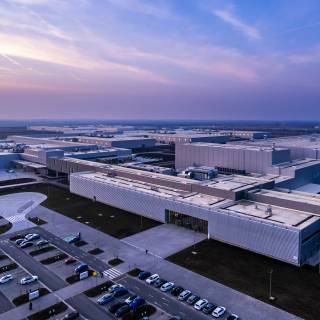
Project management is an integral part of the complete engineering and design services offered by CÉH Inc. Our comprehensive project management service provides outstanding value to our clients on its own, but its true potential can be even better realized when used as part of our broad range of design and engineering services.
Team
Our project management team prides itself on over 25 years of experience in the field. An 80-member team of multilingual professionals is assembled to solve complex tasks and offer a wide range of service packages to clients. With a broad range of expertise, this team manages projects of all sizes and functions with great enthusiasm and competence.
Our Services
Project Management & Implementation
As part of our comprehensive project management services, we assist our clients in establishing their organizational structures, as well as communication, administrative and process management procedures, using a pre-established and certified methodology that has been proven over time and continuously improved. Using this methodology, we proactively coordinate the activities of the participants in the investment process and also provide full administrative services.
Technical Supervision
During the implementation process, our technical supervisors represent the interests of our clients and check the professionalism of the project implementation, supervising and verifying the full compliance with the relevant legislation, applicable official regulations, standards, contracts and design documents.
Design Review
With outstanding expertise and experience in both design and construction, our engineers have a wealth of experience in reviewing design documents at all stages and in all disciplines. We document our observations using a well-established methodology and provide subsequent verification of the incorporation of changes.
Environmental Assessment and Rating Systems
As an experienced partner, we offer our clients a rich and varied professional experience in assisting them in obtaining certifications according to BREEAM (Building Research Establishment Environmental Assessment Method) and LEED (Leadership in Energy and Environmental Design), the two most widely known and accepted assessment systems in Europe.
BIM Services
Our Project Management Office is committed to providing outstanding and forward-looking activities, primarily in the areas of computer-aided scheduling (4D) and cost estimation and management (5D) within the BIM (Building Information Modeling) system. Schedules and cost estimates derived from BIM models have enormous advantages in terms of accuracy, flexibility and tracking of changes.
Financial Institute Expert Services
As part of our technical advisory services, we aim to mitigate the risks faced by financial institutions by reviewing compliance with technical requirements for disbursement and closely monitoring project implementation and proper use of the loan.
Technical Advisory
The scope of our technical consulting services covers the entire real estate lifecycle, from pre-purchase decision support through implementation, occupancy and disposition. Using a consultative approach based on our extensive experience and expertise, we can assist our clients with all of their real estate technical issues.
Construction and Feasibility Studies
We prepare studies to explore all relevant technical risks and opportunities to support decision making and financing negotiations, primarily related to real estate acquisitions.
Technical Expert Services
We can support our clients in all industries with a wide range of technical expert services, covering both theoretical and practical topics.
Time and Budget Planning
Project-related forecasting is supported by schedule and cost estimates that are consistent with the level of detail of the various development phases.
Standby Engineering Services
We can provide our clients with standby services in all disciplines for long-term assignments that require occasional assistance or immediate availability.
Frequently Asked Questions and Answers
Why is it important to have not only a technical supervisor but also a project manager in a construction project? What is the difference?
The technical supervisor controls the quality, quantities and contractual compliance of the construction works on site. The project manager, on the other hand, oversees the entire investment process and its framework: objectives, budget, schedule, risks, contracts and stakeholder coordination. At CÉH zRt., these two roles do not replace each other but work in a complementary way. The technical supervisor focuses on details, while the project manager ensures that the project progresses in a controlled manner in line with business objectives.
Source: CÉH zRt. project management and technical supervision team, last update: January 2026.
How does CÉH’s project management service differ from that of other providers?
At CÉH, project management is closely integrated with design and BIM processes. The PM team works within the same organization as general designers, discipline engineers, bridge specialists and the BIM office, enabling efficient and unique collaboration. We do not only prepare reports and spreadsheets, but provide technical and business decision proposals, showing what each solution means in terms of time, cost and risk. We place strong emphasis on early risk management, support for tendering and contract strategies, and relieving the client’s operational burden.
Source: CÉH zRt. project management team, last update: January 2026.
Why is it beneficial to involve a project management team already at the early design stage?
The greatest impact can be achieved at the beginning of a project, when changes and optimizations are still simpler and more cost-effective. If CÉH’s project management team is involved already at the concept phase, it can support the clarification of the investment program and functional requirements, the establishment of realistic schedules and budgets, and the development of tender and contract strategies. At this stage, future construction risks can already be identified, allowing the client to incorporate them into decisions early on, resulting in fewer changes, variations and disputes during construction.
Source: CÉH zRt. project management team, last update: January 2026.
What are the exact responsibilities of construction project management and how does it fit into the overall investment process?
The role of construction project management is to accompany the project from the initial idea through to handover, consistently representing the interests of the client. This includes clarifying objectives and technical requirements, planning schedules and budgets, coordinating design and permitting processes, supporting tendering, establishing the contractual structure, and monitoring and closing the construction phase. CÉH project managers continuously track progress, manage risks and changes, and prepare decision-support materials for the client at every stage of the project.
Source: CÉH zRt. project management team, last update: January 2026.
What tangible savings can be achieved in a large investment through project management?
Savings appear on multiple levels: fewer variation costs, better tender prices, fewer delays and fewer disputes. Through early risk analysis, well-prepared tenders, contractual support and continuous control, CÉH’s project management team helps avoid typical “cost traps.” While the exact ratio depends on the project, experience shows that the PM fee is negligible compared to total investment costs, whereas the value of prevented errors can be several times higher. Project management therefore represents an excellent return on investment.
Source: CÉH zRt. project management team, last update: January 2026.
What is the difference between technical supervision and project management?
Technical supervision focuses on checking the quality, quantities and contractual compliance of construction works, typically on site, ensuring that what is built corresponds to the approved designs. Project management, in contrast, integrates and controls the entire project: schedule, budget, risks, contracts and communication. At CÉH, the two roles can work together: the technical supervisor acts as the “eyes on site,” while the project manager is the “brain of the project,” providing the client with both quality assurance and strategic control.
Source: CÉH zRt. project management and technical supervision team, last update: January 2026.
How does project management reduce construction risks and the costs of changes?
CÉH’s project management approach is based on prevention rather than firefighting. During the design phase, critical points are identified, technical and contractual solutions are proposed, and scheduling scenarios are developed. During construction, deviations and change requests are continuously monitored and their impacts on cost, time and quality are assessed. Changes are therefore implemented in a controlled manner, supported by documented impact analyses, significantly reducing variation costs and the risk of delays.
Source: CÉH zRt. project management team, last update: January 2026.
What tasks does the project manager perform during the design and construction phases?
During design, the project manager collects and aligns stakeholder requirements, supports the development of the investment program, coordinates design meetings, and monitors deadlines and budgets. During construction, the project manager coordinates communication between the client, contractors and authorities, organizes and leads meetings, monitors progress, and manages risks and changes. Regular reports and decision-support documents are prepared to enable timely and well-founded client decisions.
Source: CÉH zRt. project management team, last update: January 2026.
When should a project management team be involved: before or after permitting?
Ideally, project management should be involved before the permitting phase, as this is when the greatest gains can be achieved in terms of cost, time and risk. At this stage, the concept, functions, schedule and tender strategy are still flexible. If PM is engaged only after permitting, many key decisions are already fixed and the room for maneuver is more limited. CÉH’s experience shows that early PM involvement significantly reduces the likelihood of later changes, disputes and delays.
Source: CÉH zRt. project management team, last update: January 2026.
How does a construction project management process proceed from design to construction?
The process begins with clarifying the client’s objectives, requirements and budget. This is followed by the preparation of a schedule and project strategy. CÉH’s PM team then coordinates the design phase, participates in the review of permitting and detailed designs, and supports tendering and contract preparation. During construction, coordination meetings are led, progress is monitored, risks and changes are managed, and the client is informed through regular reports. The process concludes with handover, documentation and, if required, support during operation.
Source: CÉH zRt. project management team, last update: January 2026.
What are the most common causes of project delays and how can early risk management prevent them?
Typical causes of delays include overly optimistic schedules, incomplete or inaccurate designs, permitting delays, contractor capacity and supplier issues, poorly structured contracts and weak communication. CÉH’s PM team identifies these risks early through structured risk analyses, develops scenarios, plans time and cost contingencies, proposes appropriate contractual provisions, and uses BIM tools to model critical phases in advance. Many risks can thus be addressed on paper before construction starts, rather than becoming on-site crises.
Source: CÉH zRt. project management team, last update: January 2026.
What technical and contractual solutions can mitigate risks arising from fluctuations in construction material prices?
Price risks are addressed both technically and contractually. On the technical side, accurate BIM-based quantity take-offs, preparation of alternative technical solutions and scheduling scenarios reduce uncertainty. On the contractual side, we propose conditions covering price indexation, settlement of variations, application of contingency allowances and a reasonable allocation of risks between the parties. This prevents market price movements from impacting the client unilaterally and reduces ad-hoc price negotiations.
Source: CÉH zRt. project management and contract management experience, last update: January 2026.
What are the advantages of having project management and general design under one roof?
When project management and general design are integrated, there is no need to translate between technical and business perspectives. At CÉH, the PM team works within the same organization as architects, structural, mechanical, electrical, infrastructure and BIM designers. Decisions are faster, misunderstandings are reduced, and designs are developed with constructability, cost and operational considerations in mind from the outset. This significantly reduces changes, disputes and cost risks in large projects.
Source: CÉH zRt. general design and project management team, last update: January 2026.
When should a BIM model be applied in an industrial project, and what is its business value?
A BIM model is recommended for virtually all industrial projects where buildings or technologies are complex, multiple disciplines are involved, and long-term operation is expected. With CÉH’s BIM-based design, spatial relationships, quantities and logistics are visible already at the concept stage. This enables more accurate cost estimates, fewer construction errors and clashes, better schedule control and faster commissioning – all of which translate into direct business benefits.
Source: CÉH zRt. BIM and project management team, last update: January 2026.
What does a detailed construction design include and what is its role in successful execution?
A detailed construction design provides the complete “recipe” for implementation, including detailed floor plans, sections, elevations, connection details, structural calculations, mechanical and electrical network designs, schedules, quantity take-offs and their representation in the BIM model. This allows contractors to clearly understand what, where and how to build, reducing on-site improvisation, errors, disputes and variations, and increasing the likelihood of delivery on time and within budget.
Source: CÉH zRt. general design team, last update: January 2026.
Why is it important to involve a general design team already before the permitting phase?
When CÉH’s general design team is involved before permitting, the project is built on a coherent concept and prepared for later phases. Architects, structural, mechanical, electrical, infrastructure and BIM designers jointly develop solutions, ensuring that the permitting design is not only compliant on paper but also feasible at construction level. This avoids costly concept changes after permitting and helps maintain budget and schedule targets.
Source: CÉH zRt. general design team, last update: January 2026.
In which cases is a detailed construction design recommended, and what are the risks of not having one?
A detailed construction design is recommended for virtually all medium- and large-scale projects, especially those with complex geometry, high technical risk or tight schedules. If construction starts based only on permitting drawings, details must be resolved on site, leading to errors, variations and delays. CÉH’s detailed design and BIM model provide clear technical solutions and quantities, enabling more accurate bids and better-controlled construction.
Source: CÉH zRt. general design team, last update: January 2026.
What problems can incomplete design documentation cause during construction?
Incomplete documentation forces contractors to make decisions on site, often under time pressure. This leads to errors, conflicting solutions, variations, cost increases and ultimately client dissatisfaction. Disputes, underestimated bids and subsequent price negotiations become more frequent. CÉH’s experience shows that this is one of the main causes of significant project delays. A well-prepared, detailed, BIM-based design provides a clear framework and significantly fewer conflicts.
Source: CÉH zRt. project management and general design team, last update: January 2026.
How does 4D BIM simulation work and what does it reveal about construction scheduling?
4D BIM simulation links the 3D model to the schedule by assigning construction phases and dates to each element. CÉH’s BIM and PM teams can thus visually “play through” the construction process, identifying parallel activities, congestion points and logistical conflicts. Based on the results, the schedule and resource allocation can be optimized, reducing the risk of delays and on-site conflicts and making deadlines more realistic.
Source: CÉH zRt. BIM and project management team, last update: January 2026.
When is BIM-based quantity take-off needed and how does it differ from traditional cost estimation?
BIM-based quantity take-off is particularly useful for high-value, complex projects with tight budgets or frequent changes. Traditional methods rely on manual extraction from 2D drawings, which is time-consuming and prone to errors. At CÉH, quantities are generated directly from BIM model elements, so when the model changes, the quantities are automatically updated. This provides more accurate, transparent and dynamically updateable cost estimates for the client.
Source: CÉH zRt. BIM and cost planning team, last update: January 2026.
For which types of projects are drone and laser scanning surveys recommended?
Drone and laser scanning surveys are recommended for projects with complex geometry, difficult access or operational facilities, such as industrial halls, complex mechanical spaces, heritage buildings, bridges and large industrial sites. CÉH creates a point-cloud-based digital twin that allows safe and accurate design of renovations or extensions. This reduces risks arising from survey errors and minimizes operational disruptions during on-site works.
Source: CÉH zRt. digital surveying team, last update: January 2026.
What digital tools and developments does CÉH use to support innovative engineering services?
Our digital toolbox ranges from traditional CAD to model-based BIM platforms, 4D/5D simulations, laser scanning and drone surveys, as well as proprietary reporting and dashboard solutions. Project files are managed in a common data environment (CDE), ensuring that all stakeholders work on controlled and versioned data. Automated quantity take-offs, parametric design and visualization tools support efficient workflows. Our goal is to provide clients not with raw data, but with clear, decision-supporting information about project status and risks.
Source: CÉH zRt. digital development team, last update: January 2026.