Model-based design of a long-span conveyor bridge in an industrial environment
As part of the expansion project of an existing industrial facility abroad, we prepared the detailed design of a specially configured steel conveyor bridge and the adjoining new paint shop, applying a BIM-based approach. The bridge was constructed above existing industrial buildings under highly constrained site conditions; therefore, not only the structural design itself, but also functionality, constructability, and erection technology played a decisive role throughout the design process.
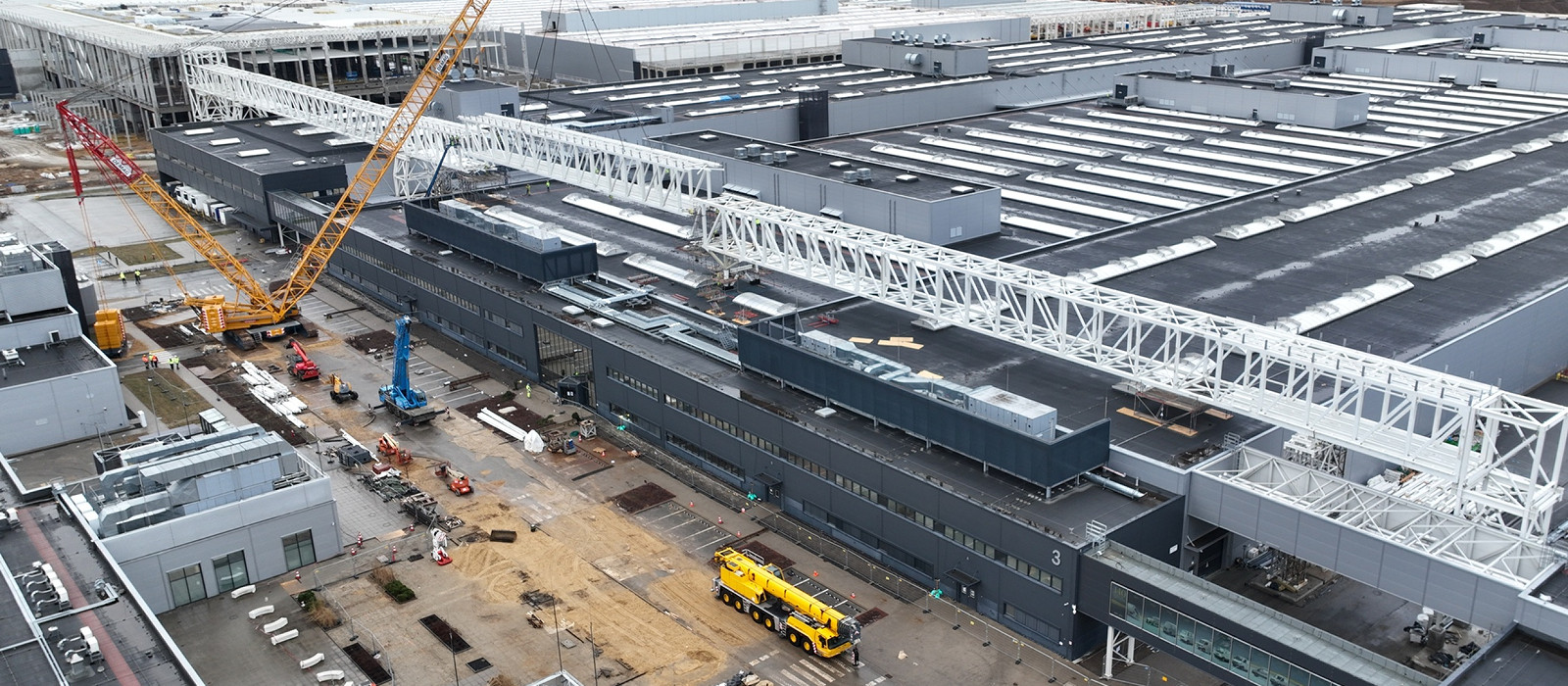
The industrial bridge structure has five spans, with a total length of 385 m and a maximum span of 100 m. The truss cross-section is 4.9 m wide and 6.2 m deep. The bridge’s primary function is to carry the conveyor belt technology, as well as the associated service systems. However, the requirements arising from the specific industrial environment made it necessary to adopt solutions that differ in several respects from those used in conventional bridge structures.
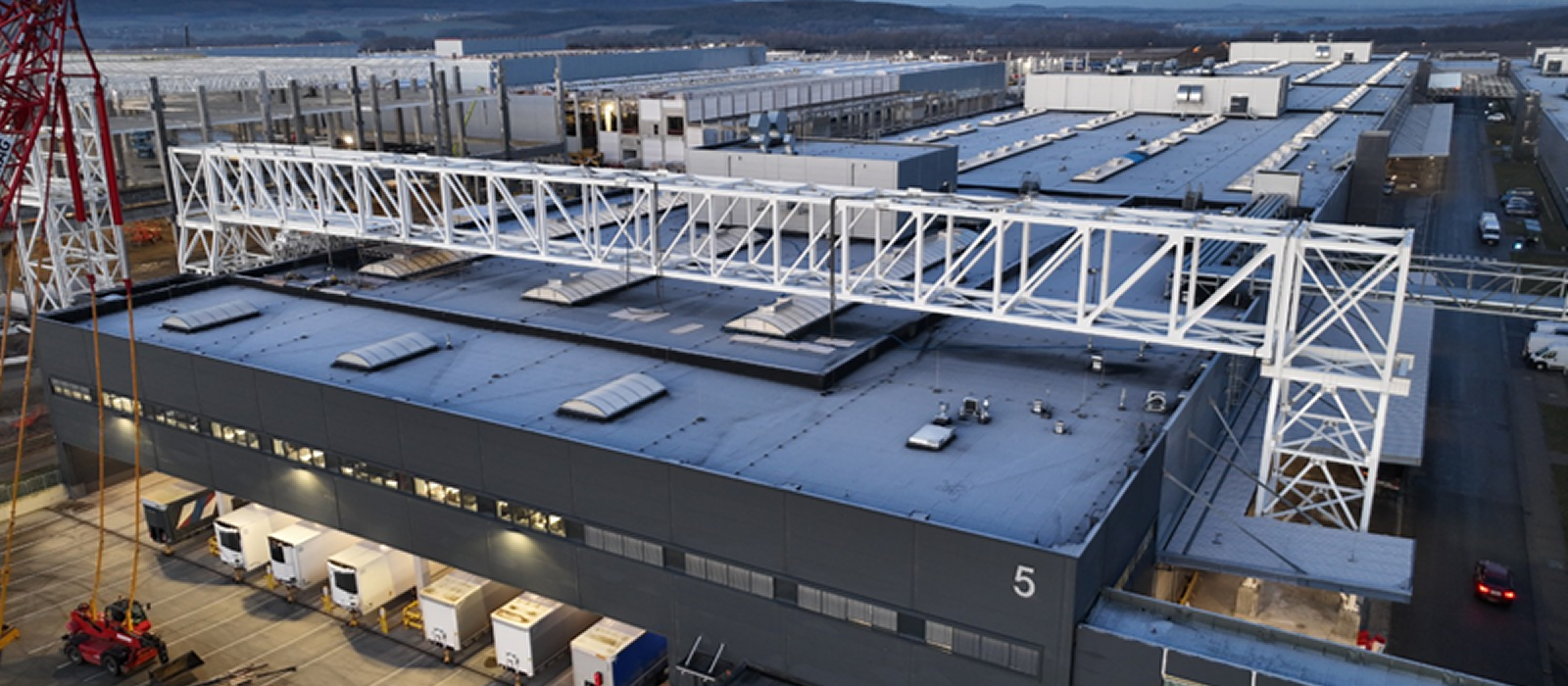
One of the most important engineering challenges in the design process was to ensure the geometric stability of the long-span truss girder, as the technological conveyor belt to be installed on the bridge was subject to extremely tight geometric tolerance requirements. For this reason, the analysis of deflections, final geometry, precamber, and the geometry during erection formed a key part of the structural calculations.
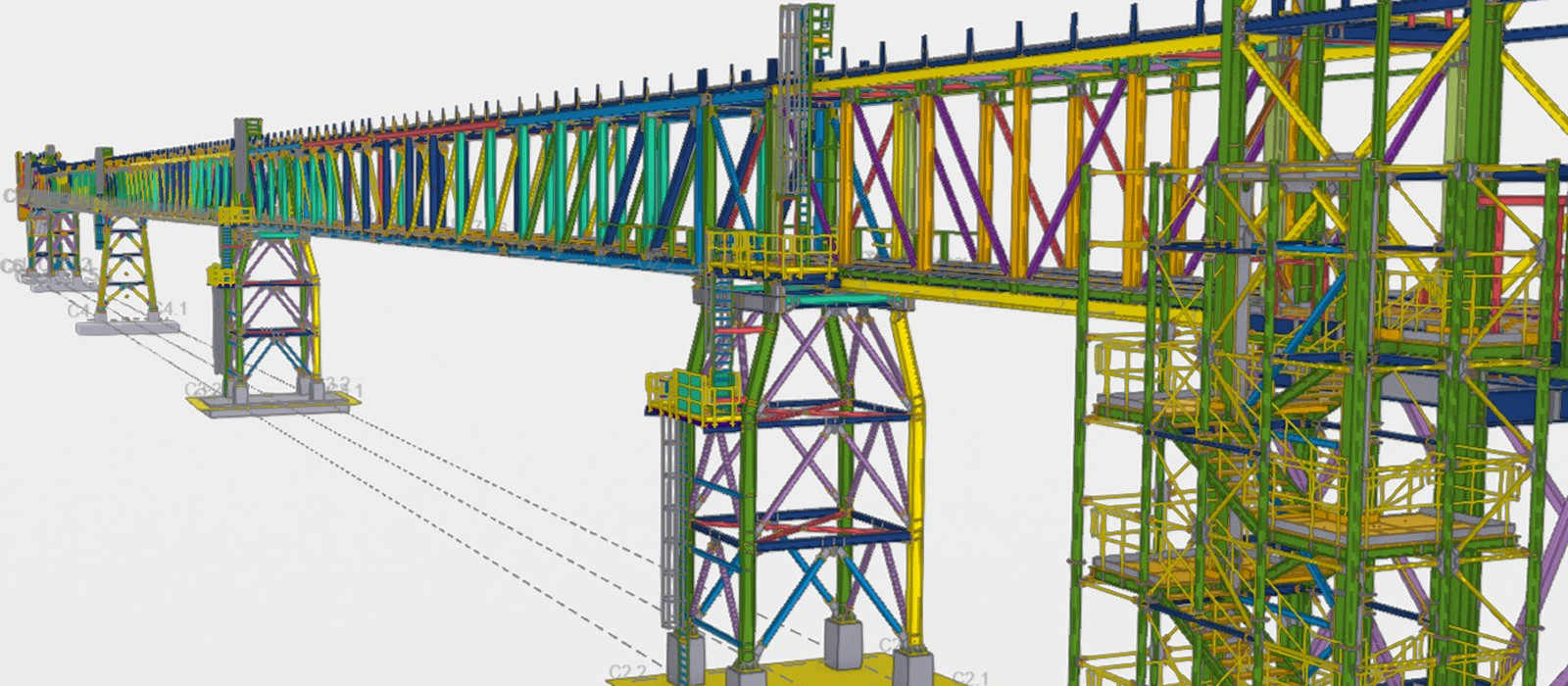
Due to industrial and technological requirements, the bridge structure’s joints differed in many cases from conventional bridge design solutions. The development, dimensioning, and detailing of these unique joints in a way that ensured both manufacturability and ease of erection constituted a distinct engineering task, requiring the classical bridge engineering approach to be aligned with the specific demands of industrial technology.
The detailed design documentation — including the steel structure design — was prepared at LOD 400 level of development. As a result, the model not only supported geometric coordination and improved the efficiency of the design process, but, following minor refinements, also served directly as the basis for steel fabrication. The design was carried out in a shared CDE model environment, in which CÉH zRt.’s bridge engineers, architects, and other related discipline designers, as well as the steel detail designer and the independent checker, worked collaboratively on the same digital 3D model. This workflow significantly increased the efficiency of multidisciplinary coordination, clash detection, and change tracking, and, in addition, substantially reduced the turnaround time of design modifications required during the course of this highly fast-paced Design & Build project.
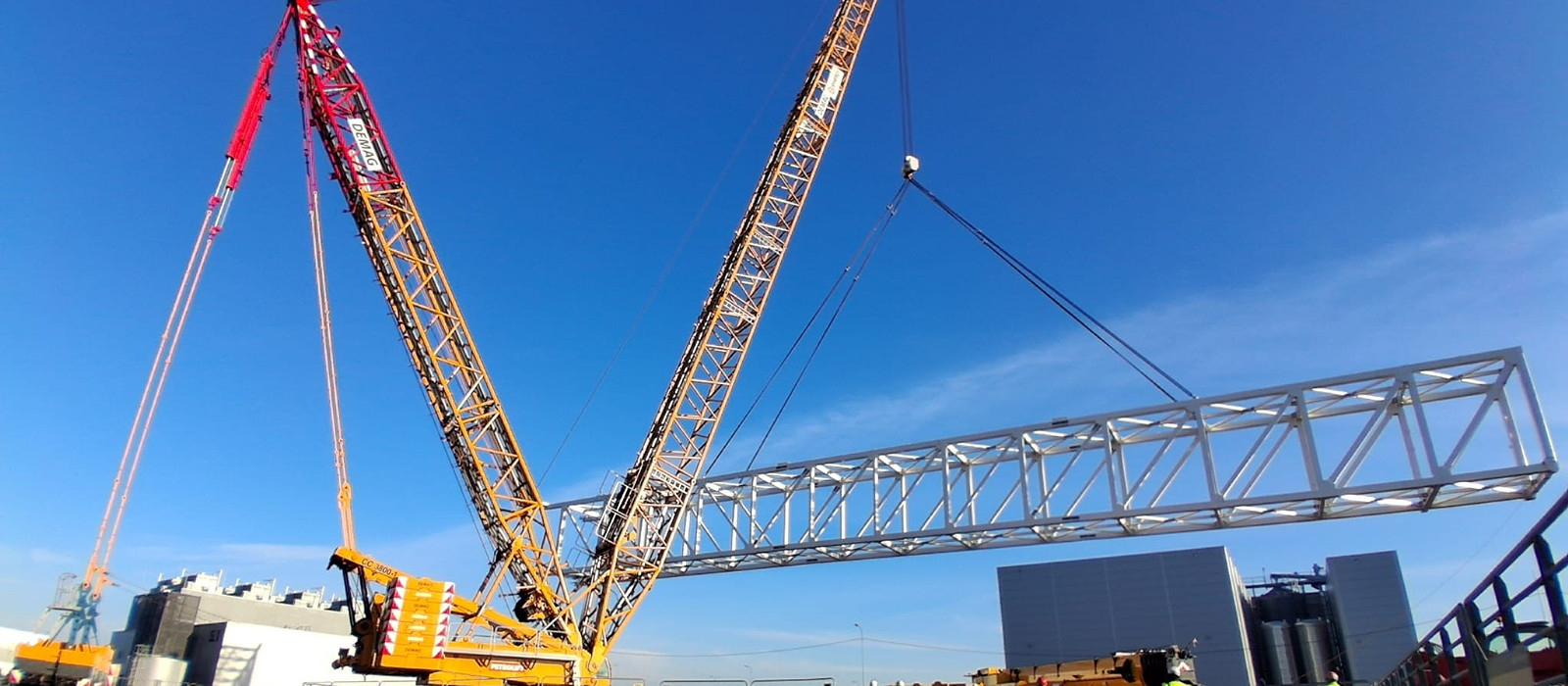
The planning of on-site erection required thorough consideration. The structural elements were installed as separate erection units using free cantilever assembly. The connection of these erection units took place above the existing industrial buildings, from dedicated scaffolding, by means of bolted joints. Depending on the surveyed geometry of the structures already erected in the preceding assembly stages, the positioning of the lifting units and the precise alignment of their bolted connections were of particular importance.
The heaviest lifting unit weighed nearly 160 tonnes. Owing to the existing site constraints, it had to be lifted into position from a distance of approximately 50 m, above existing buildings, and then aligned with high precision to the cantilevered ends of the superstructure units that had already been erected. The lifting operation was carried out by a 1,400-tonne crawler crane, which in itself made this stage of the erection works particularly remarkable.
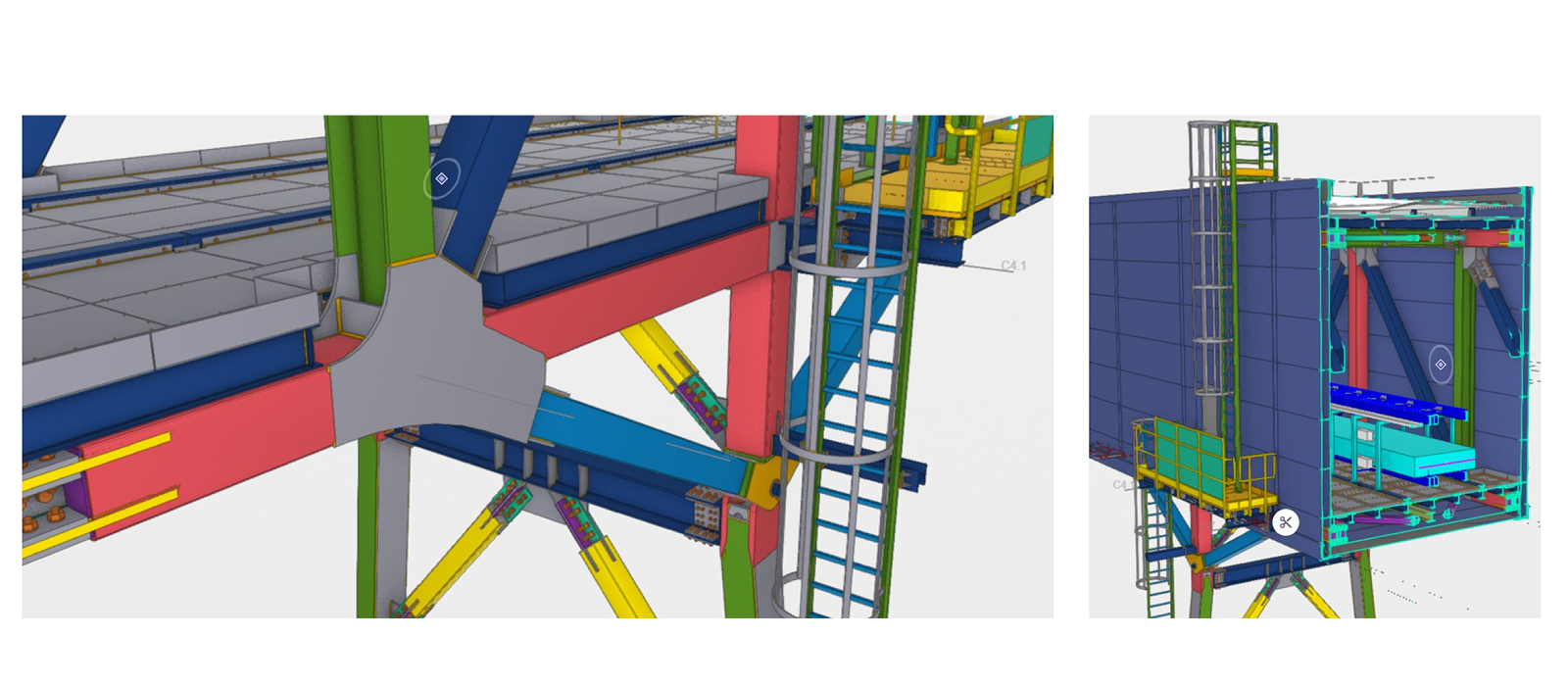
The project clearly demonstrates that, in steel structure design, the digital model is no longer merely a documentation tool, but also a fundamental instrument for ensuring manufacturability, erectability, and the management of construction risks. In this way, the design of the conveyor bridge represented not only the solution of a complex engineering challenge, but also a compelling example of the practical advantages of a model-based, integrated design approach.
Péter Kolozsi, Bridge Design Project Manager – CÉH zRt.